
Top Airtable Competitors for Teams Fleeing Bending Spoons

Bending Spoons acquired Airtable earlier this year. If you know Bending Spoons, the Italian holding company that bought Evernote and WeTransfer, you know their playbook: layoffs, price increases, tighter free tiers, metered credits.
Airtable once peaked at an $11.7 billion valuation in 2021 but Bending Spoons paid $2.25 billion. A lot of companies are betting this story won't end with a better product.
The tool isn't broken yet. But, I've been asked about alternatives often enough to write this down. Here's what I recommend and why.
This post contains affiliate links because corporations don't need free referrals.
Notion
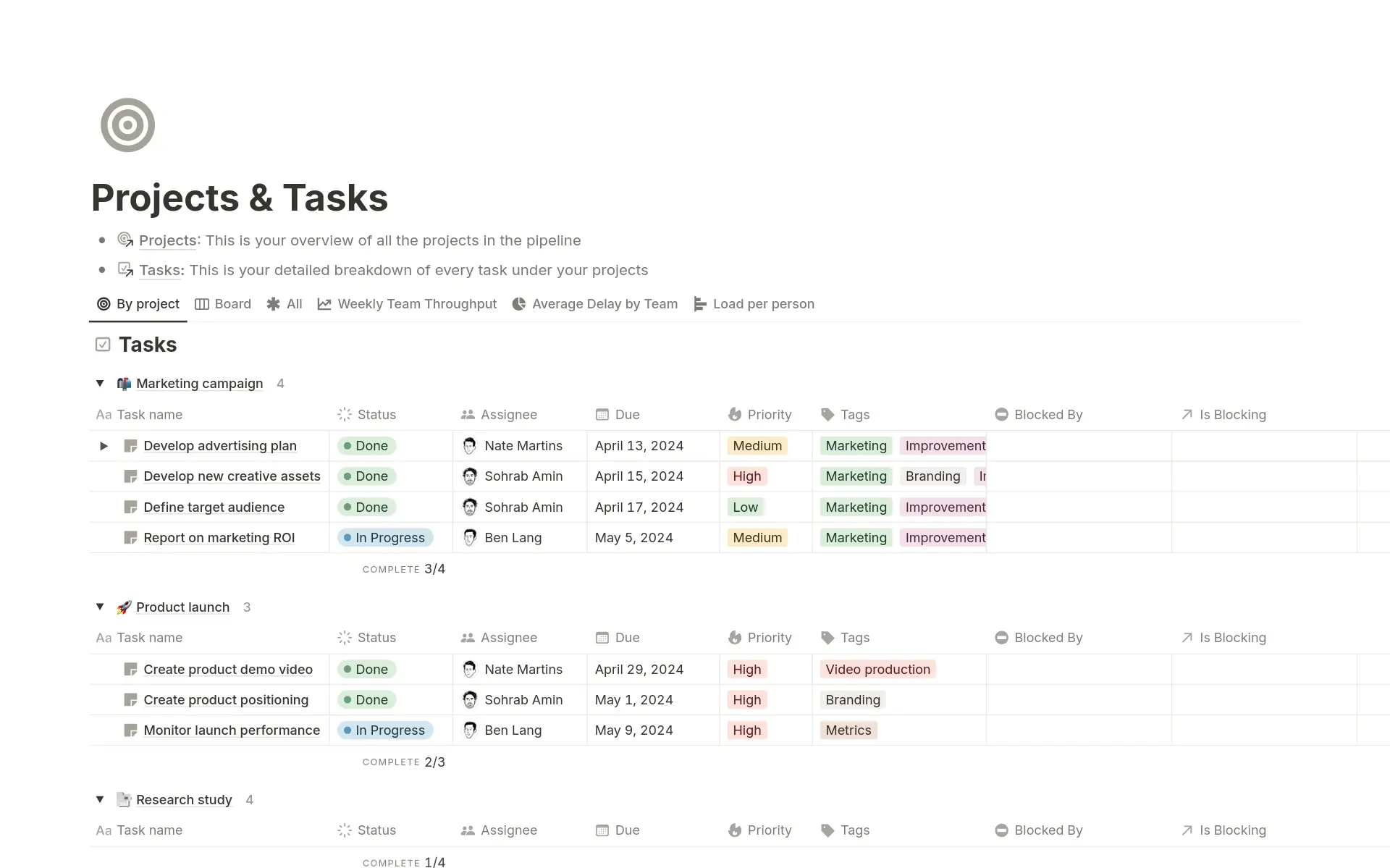
I don't know a single enterprise Airtable customer who isn't already a Notion customer. I'm sure they exist. I just haven't met any. Most companies that moved to Airtable for relational databases and process management have, at some point, also picked up Notion for knowledge management, design assets, and qualitative information. The two end up coexisting because Notion's databases have historically been the weaker side.
That changed with Notion's 2025 database revamp. It's now a real competitor to Airtable's bases, not a workaround. For organizations looking to consolidate tools rather than migrate somewhere unfamiliar, Notion is the obvious first move. You're likely already paying for it.
In today's market, it's the number one viable Airtable alternative.
The caveat: Notion is still more document-native than data-native. If your primary use case is running operational workflows on consistent data models rather than organizing information, keep reading.
Fibery
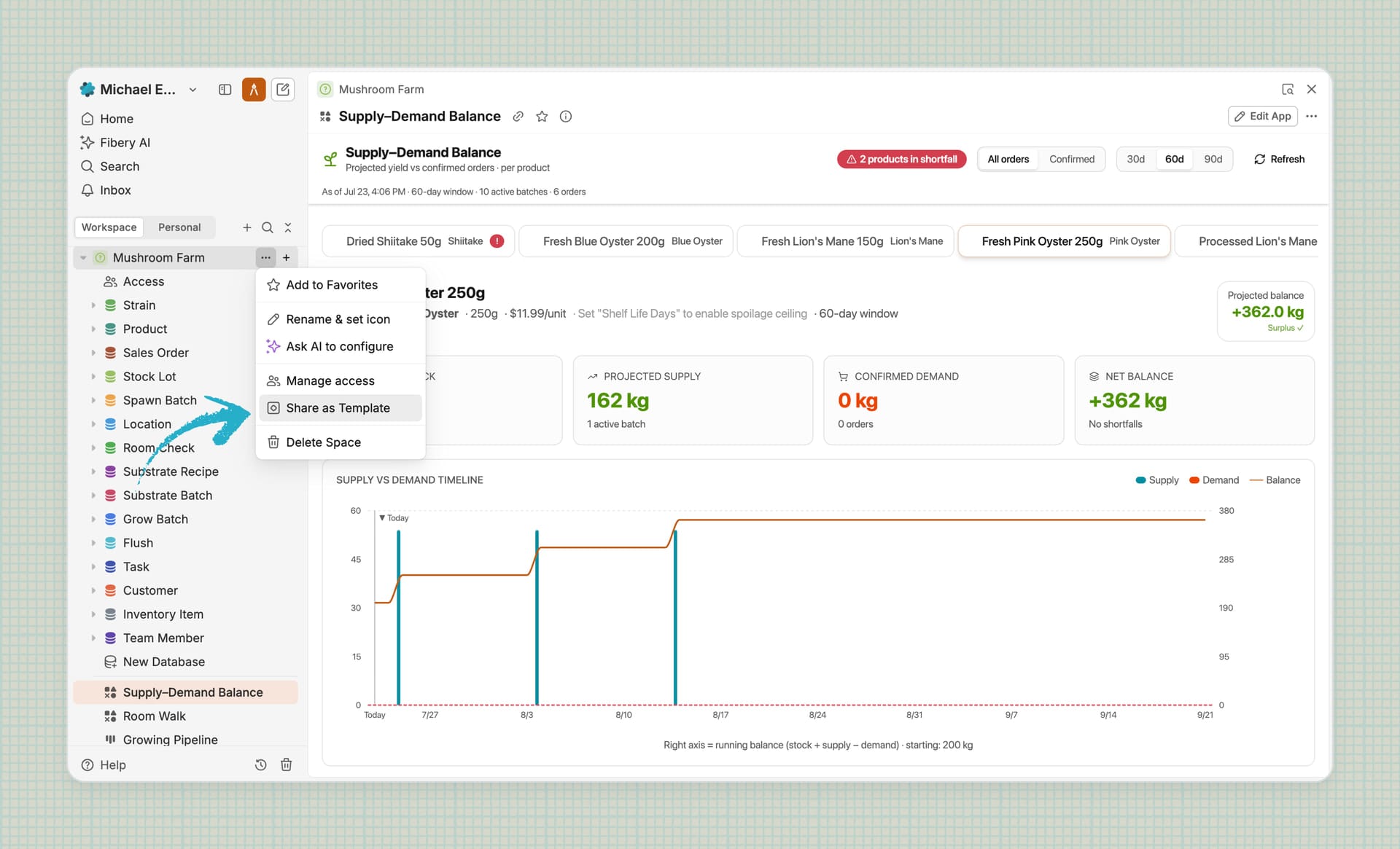
Fibery is a Europe-based work/data management tool. European companies operate under compliance constraints American startups don't often think about until they've scaled. The side effect is that Fibery's data privacy and architecture was built durably from the start.
Fibery's databases have always been limitless: no row caps, no workaround gymnastics when your most important tables grow too large. For any use case where data accumulates over time against a consistent model (client records, project histories, operational logs), that's a clear win.
The databases are also truly global and there's no isolated data in Fibery. Everything lives in one connected schema, which is either a significant advantage or a friction point depending on how your team works.
For companies with an internal owner responsible for managing and maintaining their data, it's an advantage. It's also a strong fit for teams with developers who enjoy building custom solutions on top of their databases, which is common among Airtable users anyway.
The integration ecosystem is smaller, with fewer high-priced third-party tools filling the gaps. What's changed is MCP support for custom app development. As of mid-2026, anyone with a Claude or ChatGPT subscription can build web app interfaces that live on Fibery servers without traditional development. That changes the ecosystem calculation for teams that were relying on third-party tooling.
Superhuman Docs (formerly Coda)
Coda was acquired by Grammerly and rebranded Superhuman Docs in 2026. The product is functionally the same. Existing Coda documents transferred over, pricing didn't change, features stayed intact.
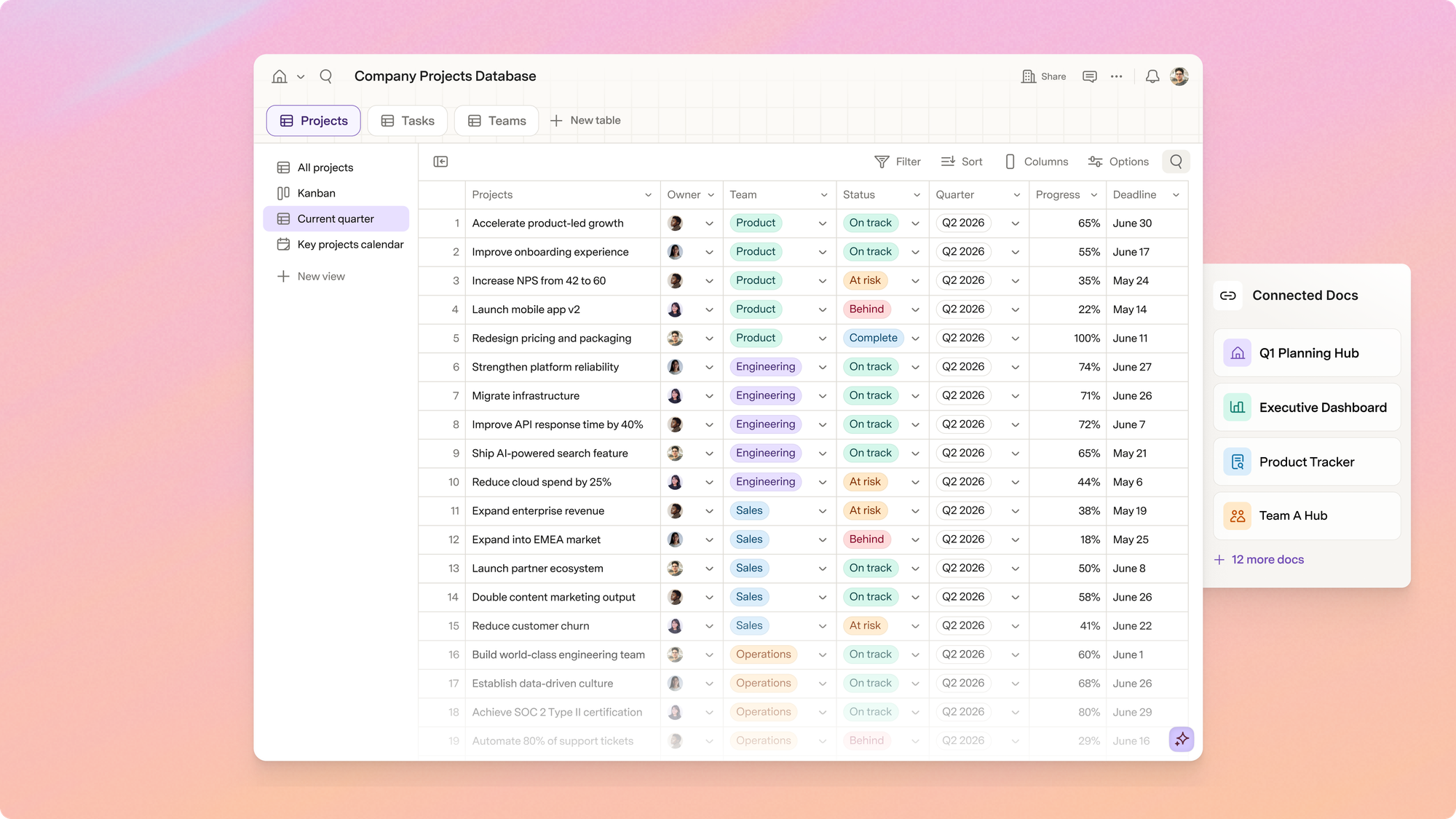
New name, same tool.
For years, Coda has been my go-to recommendation for one specific use case neither Fibery nor Notion handles cleanly: data models that only need to exist for a defined period of time. One doc per client, one per project phase, a structure you build for a workflow and retire when it ends. Fibery's global schema makes ephemeral, isolated data structures awkward. Notion does this moderately well but you'll get into trouble at times with global search. Superhuman Docs does it natively.
Plus, they have recently launched dedicated table views and true databases which makes migrating form Airtable much smoother. Superhuman Docs, like Notion, is more flexible with Airtable when it comes to qualitative information, writing, and images. I've always said this app is the fastest to deploy a solution in.
Although it's not as ready for prime time as the first two. That said, if you're evaluating Airtable alternatives, include it. It fills a gap the others don't.